


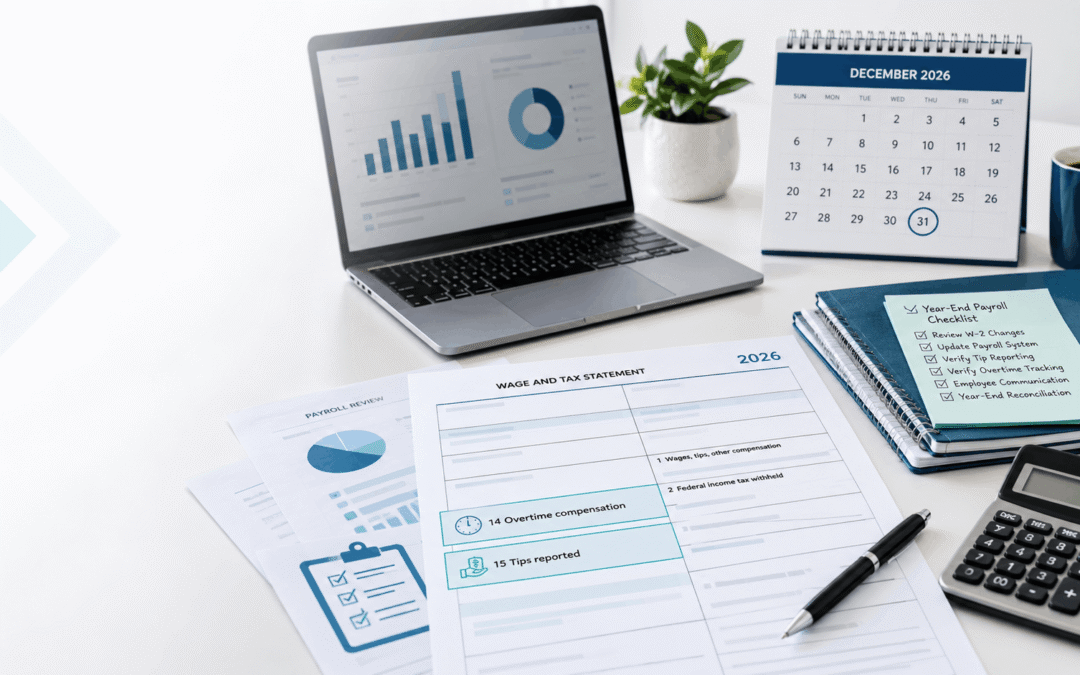
Year-end payroll always requires careful preparation, but employers have a few additional reasons to start early in 2026. Changes to federal reporting requirements mean this year’s W-2 process will look different for many businesses—particularly employers with workers who receive qualified overtime or tips.
Waiting until January to discover what information should have been tracked throughout the year can create unnecessary payroll headaches. September is a good time to review what has changed and make sure your records are ready.
New Reporting for Qualified Overtime
Beginning with 2026 reporting, employers must separately report qualified overtime compensation. The IRS has added code TT to Box 12 of Form W-2 for this purpose.
One important distinction is that “qualified overtime compensation” does not necessarily mean every dollar paid to an employee working overtime. Under the federal provision, the reportable qualified amount generally relates to the premium portion of overtime required under the Fair Labor Standards Act.
For employers with nonexempt employees regularly working overtime, accurate payroll records become especially important.
Changes for Employees Who Receive Tips
Employers with tipped employees will see additional changes as well. The 2026 Form W-2 includes new reporting related to cash tips and Treasury Tipped Occupation Codes. The form’s Box 14 has been revised into Box 14a and Box 14b, with Box 14b used for applicable tipped occupation codes.
These changes connect to new federal deductions available to qualifying individuals for certain tips and overtime compensation. Employers are responsible for providing the wage information employees need to determine eligibility when they file their personal tax returns.
Now Is the Time to Review Your Payroll Setup
Even if year-end filing still feels far away, businesses should make sure employee classifications, overtime records, tip reporting and payroll data are being handled correctly now. It is much easier to correct a process in September than to reconstruct months of payroll records in January.
Employers should also remember that federal requirements are only one part of year-end payroll. Employee information, benefit deductions, taxable fringe benefits and applicable state reporting all need to be accurate before W-2s are prepared.
Paymaster Payroll Services helps small and midsize businesses simplify payroll while staying prepared for changing reporting requirements. Instead of trying to decipher every new payroll rule at year-end, our clients have an experienced team helping them manage the process throughout the year.
If you have questions about how the 2026 changes may affect your business, contact Paymaster Pro before year-end arrives.